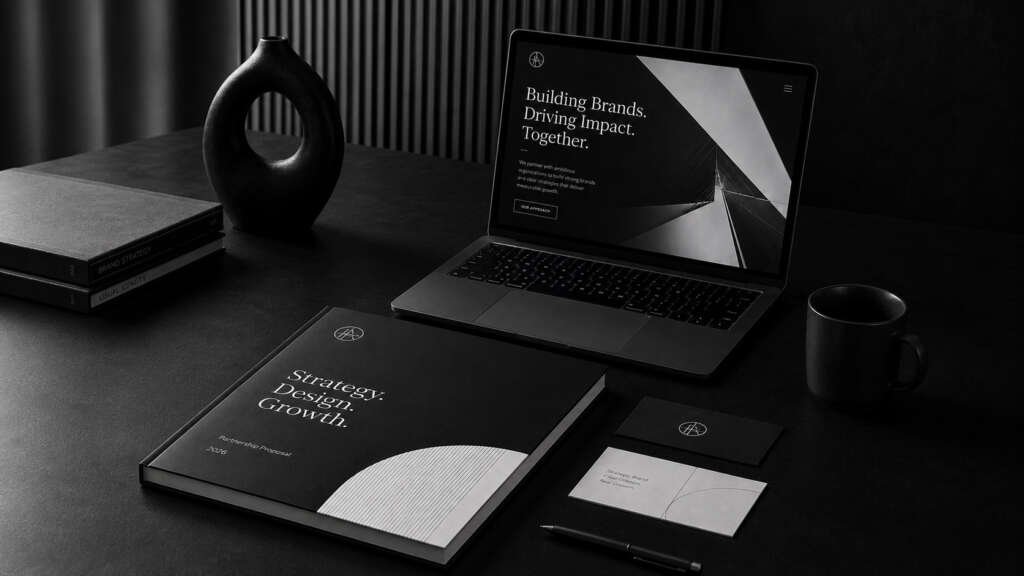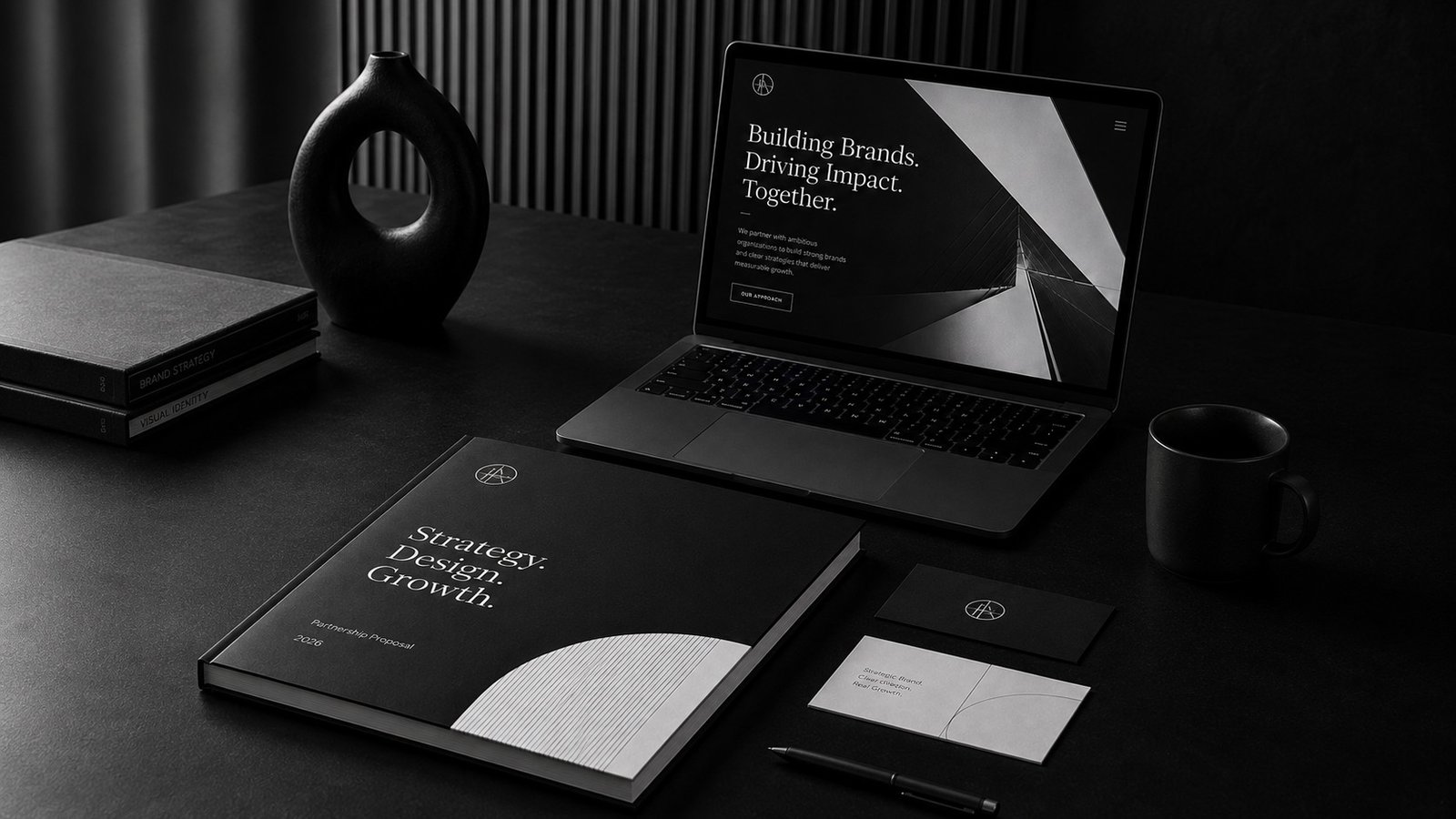
Your Website Is Not a Brochure
It is not just a place to put your logo, list your services and add your contact details. It is not something a business should build once, forget about and only update when it starts to look outdated.
A professional website is a business asset.
It works before the meeting.
It explains before the phone call.
It reassures before the quote.
It qualifies before the enquiry.
It builds trust before your sales team enters the room.
Website design in Namibia should therefore be treated as more than a visual exercise. A good website should help people understand your business, trust your offer and take the next step with confidence.
Many Namibian businesses already have visibility. People hear about them through referrals, Google, LinkedIn, Facebook, WhatsApp, tenders, networking and word of mouth.
But when a potential client searches for the business and lands on the website, the question changes.
The question is no longer only, “Can I find you?”
The question becomes, “Can I trust you?”
That is where many websites fail.
A Website Works Before the Meeting
Before someone contacts your business, they often visit your website.
They want to know who you are.
They want to understand what you do.
They want to see if you look credible.
They want to compare you with someone else.
They want to know if you are serious enough to approach.
This happens quietly.
A potential client may not tell you that they visited your website. They may not tell you that your homepage confused them. They may not tell you that your competitor looked more professional.
They simply make a decision.
That is why a website should not be treated as a digital brochure. A brochure presents information. A good website guides a decision.
It should help visitors understand:
- What your business does
- Who you help
- Why your work matters
- What services you offer
- What makes you credible
- What proof you can show
- How to contact you
- What action they should take next
A website is not only about looking good. It is about reducing doubt.
Why Facebook Alone Is Not Enough
Many businesses in Namibia still rely heavily on Facebook, Instagram or WhatsApp as their main digital presence.
Social media is useful. It helps with visibility, awareness and communication. But social media alone is not enough for a serious business.
A Facebook page is not a proper website.
An Instagram grid is not a company profile.
A WhatsApp number is not a digital strategy.
Social platforms are rented spaces. Their algorithms change. Their layouts change. Their reach changes. Their rules change. You do not control the environment.
Your website is different.
Your website is owned digital infrastructure. It gives your business a central place where people can understand your services, verify your credibility, read about your work, contact you directly and find you through Google Search.
That matters because customers often use different platforms for different stages of the decision.
They may discover you on social media, but check your website before they trust you.
They may hear about you from a referral, but Google you before they contact you.
They may see your advert, but visit your website to decide whether you look credible.
If your website is weak, outdated or missing, your digital marketing has a trust problem.
What Customers Expect From a Professional Website Today
A professional website in 2026 needs to do more than exist.
It must be clear, mobile-friendly, fast, credible and easy to navigate. It must answer real questions. It must help users move from interest to enquiry without confusion.
A strong business website should include:
- A clear homepage message
- Strong service pages
- Professional imagery
- Clear calls to action
- Fast-loading pages
- Mobile-friendly design
- Search engine optimisation
- Contact details that are easy to find
- A proper About page
- Examples of work or proof
- Google Maps or location information where relevant
- Strong page titles and meta descriptions
- Internal links between key pages
- Trust-building copy
- A simple enquiry path
This is especially important for companies selling professional services, corporate services, financial services, logistics, consulting, construction, property, cleaning, design, marketing, technology or B2B services.
In those categories, your website is not only a marketing channel. It is part of your credibility.
The Real Ranking Opportunity
Many Namibian websites are still underdeveloped from an SEO point of view.
That creates opportunity.
A business that invests in proper website design Namibia strategy can compete more effectively on Google by building service pages, writing useful content, improving technical structure and creating a better user experience.
Google’s own guidance encourages businesses to create helpful, reliable, people-first content. That means your website should not only be filled with generic marketing phrases. It should answer the questions your customers actually ask.
For example, a strong website should explain:
- What service you provide
- Who the service is for
- What problem it solves
- What makes your approach different
- What the process looks like
- What customers should prepare
- Why your experience matters
- How people can take the next step
This is where many websites lose ranking potential. They look acceptable on the surface, but the content is too thin.
A homepage alone is not enough.
If you want to rank for terms like website design Namibia, branding agency Namibia, digital marketing Namibia, logistics company Namibia, cleaning services Windhoek, business consultancy Namibia or any serious commercial keyword, your website needs structure.
Google needs to understand your pages.
Users need to understand your value.
Both matter.
AI Search Makes Strong Website Content Even More Important
Search is changing.
Google now includes AI features such as AI Overviews and AI Mode in search experiences. This means users may receive summaries, recommendations and answers before they even click through to a website.
That does not make websites less important. It makes strong website content more important.
If your website is vague, thin or generic, it gives search engines and users very little to work with. If your website is clear, useful, structured and credible, it has a better chance of supporting your visibility across modern search experiences.
This is why professional website design and SEO content should work together.
A beautiful website with weak content will struggle.
Good content inside a poor website will also struggle.
The best results come when design, structure, copywriting, SEO and conversion strategy work as one system.
Why Cheap Websites Become Expensive Later
A cheap website may seem like a saving at the beginning.
But if it is badly planned, poorly written, slow, confusing, hard to update, weak on mobile or invisible on Google, it becomes expensive later.
The true cost of a weak website is not only the money spent building it.
The bigger cost is missed opportunity.
A weak website can cost your business:
- Lost enquiries
- Poor first impressions
- Lower Google visibility
- Confused customers
- Weak credibility
- Bad mobile experience
- Wasted advertising spend
- Lower conversion rates
- Rebuild costs later
- A weaker position against competitors
This is why website design should not start with the question, “How cheap can we make it?”
It should start with, “What does this website need to do for the business?”
For some companies, the website needs to generate leads.
For others, it needs to support tender credibility.
For others, it needs to explain complex services.
For others, it needs to reposition the brand.
For others, it needs to give the sales team a stronger digital foundation.
The goal determines the structure.
The Website Credibility Checklist
If you want to know whether your website is helping or hurting your business, ask these questions:
- Does the homepage explain what we do within seconds?
- Does the website look professional on mobile?
- Are our services clearly explained?
- Does the design reflect the quality of our business?
- Are there clear calls to action?
- Is our contact information easy to find?
- Do we show proof of work or experience?
- Do our page titles support Google search?
- Do our images look professional?
- Does the website load quickly?
- Is the copy written for customers or just for ourselves?
- Does the website feel current?
- Does it make us look more credible than our competitors?
If the answer is no to several of these, your website may be holding your business back.
When Should a Namibian Business Redesign Its Website?
You should consider redesigning your website if:
- It looks outdated.
- It does not generate enquiries.
- It does not rank for important keywords.
- It is difficult to use on mobile.
- It no longer reflects your current services.
- It does not match your brand identity.
- It loads slowly.
- It has weak or generic copy.
- It does not support digital marketing campaigns.
- It does not make your business look credible.
- Your competitors look stronger online.
A website redesign is not only a visual exercise. It is a strategic opportunity to improve your message, structure, SEO, user experience and conversion path.
What a Professional Website Should Do
A professional website should:
- Build trust
- Explain your services
- Support Google visibility
- Strengthen your brand
- Make your business easier to understand
- Turn interest into enquiries
- Support your sales process
- Give customers confidence
- Create a stronger first impression
- Help your business compete
This is why website design Namibia companies choose should be approached with more ambition. Your website is often the first serious place where people judge your business. It should not feel like an afterthought.
Final Thought
Your website is not a brochure.
It is the digital front door of your business. It is the place where prospects validate your credibility, understand your services and decide whether to take the next step.
A weak website creates doubt.
A strong website creates confidence.
And in business, confidence is often what turns interest into action.
WHAT WE DO
Brand Design
Website Design
Digital Marketing
Our Work
Recent posts
Why Trust Beats Visibility
Your Website Is Not A Brochure