Why Namibian Businesses Don’t Have a Visibility Problem — They Have a Trust Problem
Many businesses in Namibia are more visible than ever.
They are on Facebook.
They are on Google.
They are on WhatsApp.
They have signage.
They send quotes.
They submit company profiles.
They attend meetings.
They appear in tenders.
But visibility alone does not create trust.
A business can be seen often and still be overlooked. A company can post every week and still look inconsistent. A service provider can have years of experience and still appear less credible than a newer competitor with a sharper brand identity.
That is the real challenge many Namibian businesses face today.
The problem is not always that people do not know you exist. Sometimes the problem is that when they find you, your brand does not give them enough confidence to choose you.
That is where branding and design matter.
A strong brand identity does not simply make a business look attractive. It helps people understand who you are, what you stand for, how professional you are, and whether you can be trusted with serious work.
For companies looking for a branding agency in Namibia, the question should not only be, “Can you design a logo?”
The better question is:
Can your brand help people believe in your business before you enter the room?
Visibility Gets You Noticed. Branding Gets You Believed.
There is a big difference between being visible and being trusted.
Visibility means people can find you.
Trust means people are willing to contact you, recommend you, request a quote, or choose you over someone else.
A Facebook post can create awareness.
A Google listing can create discovery.
A business card can create contact.
A company profile can create interest.
But your brand identity is what ties all of those moments together.
If your logo looks outdated, your colours are inconsistent, your social media designs feel random, your company profile looks weak, and your website does not match your actual level of service, the market notices.
Not always consciously. But it notices.
People may not say, “This company has poor visual consistency.”
They simply feel uncertain.
That uncertainty is dangerous because customers rarely tell you when your brand has weakened their confidence. They just move on.
The Silent Brand Signals Customers Notice First
Before people read your full company profile, they judge the cover.
Before they study your service list, they notice the layout.
Before they understand your experience, they feel the quality of your presentation.
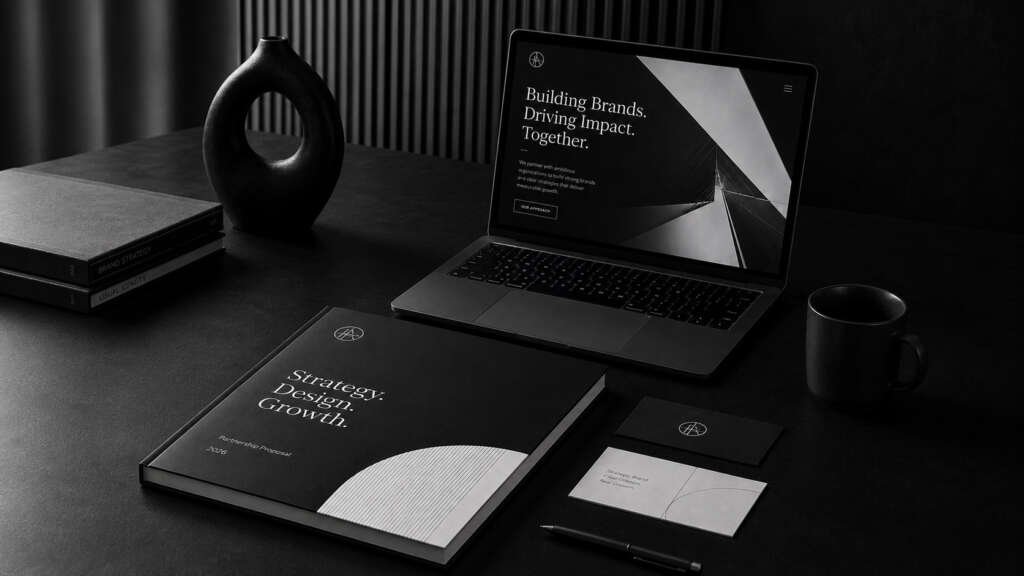
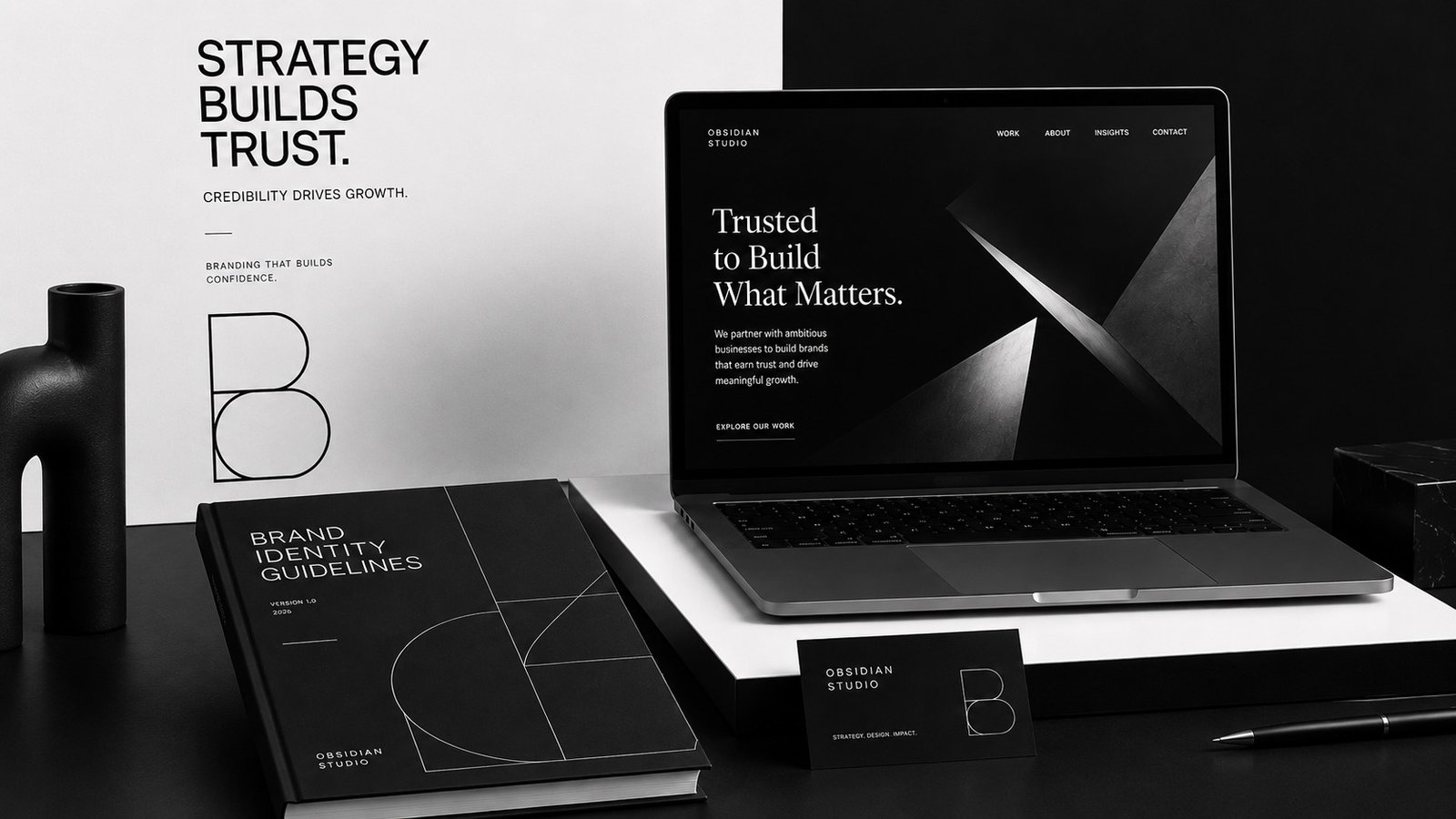
That is why brand identity is not decoration. It is commercial communication.
Your brand sends silent signals through:
- Your logo
- Your colour palette
- Your typography
- Your website design
- Your proposal layout
- Your quotation templates
- Your company profile
- Your social media graphics
- Your email signature
- Your signage
- Your photography
- Your presentation decks
- Your business cards
- Your advertising material
Each of these elements either builds trust or creates doubt.
When they work together, the business feels serious, organised and professional. When they do not, even a strong company can look smaller, less established or less reliable than it really is.
This is especially important in Namibia, where many businesses rely heavily on relationships, referrals and reputation. A referral may open the door, but your brand still needs to support the decision.
A weak brand can make a warm referral feel risky.
A strong brand makes that same referral easier to believe.
Why “Just a Logo” Is Not Enough Anymore
Many business owners still think branding means getting a logo.
A logo is important, but it is only one part of the system.
A proper brand identity gives your business a consistent visual and verbal language. It helps your company show up clearly across different platforms, from your website to your company profile, from your signage to your social media, from a tender submission to a boardroom presentation.
A logo alone cannot do that.
A logo without a brand system is like a suit jacket with no shirt, no shoes and no sense of occasion. It may be part of the outfit, but it cannot carry the full impression.
A serious brand identity should answer questions like:
- What colours represent the business?
- What typefaces should be used?
- How should layouts be structured?
- What image style fits the brand?
- How should documents look?
- How should social media posts be designed?
- How should the website feel?
- How should the business sound in writing?
- What must remain consistent across every customer touchpoint?
This is why professional brand design matters.
A business does not need to look expensive for the sake of ego. It needs to look credible enough for the type of client it wants to attract.
The Trust Gap in Namibian Business Branding
Many Namibian companies are better than they look.
That is the uncomfortable truth.
There are businesses with strong teams, solid experience, good service and real capability, but their visual identity does not reflect that level of quality.
They may have started small and never updated the brand.
They may have used a quick logo years ago and built everything around it.
They may have grown into new markets, but their design still looks like the old business.
They may be competing for bigger clients, but their presentation still feels informal.
This creates a trust gap.
The company is capable, but the brand does not prove it quickly enough.
That matters because today’s customer is comparing you faster than ever. They check your website, your Google Business Profile, your social media, your proposal, your company profile and your overall online presence.
If your competitor looks clearer, sharper and more professional, they may win the confidence before the conversation even starts.
Good branding closes that gap.
It allows the outside of the business to match the quality of the inside.
Corporate Branding Is Not Only for Big Companies
Some business owners assume corporate branding is only for banks, mines, insurance companies, large retailers or multinationals.
That is a mistake.
Corporate branding is not about company size. It is about seriousness.
A growing consultancy needs brand credibility.
A logistics company needs brand consistency.
A construction company needs professional presentation.
A financial services provider needs trust.
A cleaning company needs a polished company profile.
A law firm needs authority.
A medical practice needs reassurance.
A property business needs confidence.
A technology company needs clarity.
Every business that wants to be taken seriously needs a brand that supports that ambition.
Professional branding helps people understand that you are not operating casually. You have structure. You have standards. You have a clear point of view. You know who you are.
That is powerful in a market where many businesses still compete mainly on price.
A strong brand helps you compete on confidence.
Branding Also Supports Google and Digital Marketing
Branding and SEO may seem like different things, but they are connected.
Google encourages businesses to create helpful, reliable, people-first content. That kind of content is easier to trust when it sits inside a professional brand environment.
A useful article on a weak, outdated website may still struggle to convert because the user does not only judge the words. They judge the entire experience.
Your brand affects:
- Whether people stay on your website
- Whether they believe your content
- Whether they trust your contact details
- Whether they remember your business
- Whether they click through to other pages
- Whether they return later
- Whether they recommend you
- Whether your marketing feels professional or improvised
Brand identity also influences digital marketing performance. If your adverts look inconsistent, your landing pages feel weak, and your social content lacks a clear visual system, your campaigns may generate attention without building confidence.
That is why branding should not be treated as a once-off design job. It should be treated as business infrastructure.
When Should a Namibian Business Rebrand?
A rebrand is not always necessary. Sometimes a business only needs a brand refresh, a better design system, or improved application across digital and print material.
But there are clear signs that your business may need to revisit its identity.
You should consider rebranding or refreshing your brand if:
- Your logo looks outdated.
- Your website no longer reflects your business.
- Your company profile feels old or inconsistent.
- Your social media designs look random.
- Your proposals do not look professional.
- Your business has grown but your identity has not.
- Your competitors look more credible.
- Your brand does not work well on mobile or digital platforms.
- Your team uses different colours, fonts or templates.
- You struggle to explain what makes your business different.
- You are entering a more corporate or premium market.
- Your visual identity does not match your pricing.
A brand should grow with the business. If your company has matured, your identity should show it.
What a Strong Brand Identity System Should Include
A proper brand identity system should give your business the tools to show up consistently.
Depending on the business, this may include:
- Logo design or logo refinement
- Primary and secondary logo versions
- Colour palette
- Typography system
- Brand pattern or graphic language
- Image style direction
- Icon style
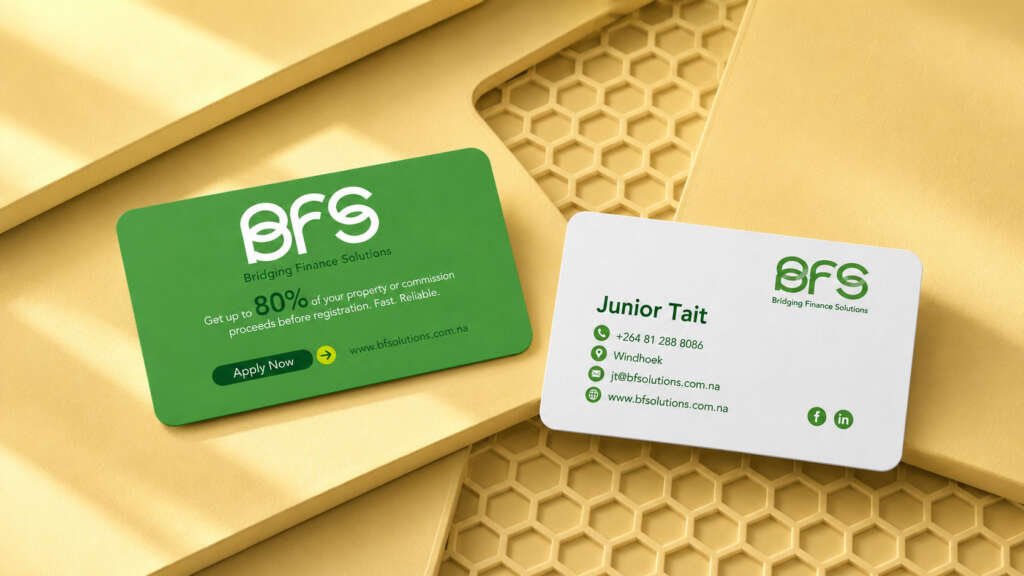
- Business card design
- Letterhead design
- Email signature
- Social media templates
- Proposal or quotation templates
- Company profile design
- Presentation template
- Basic brand guidelines
- Website design direction
- Signage and environmental branding guidance
The goal is not to create design for the sake of design.
The goal is to make the business easier to recognise, easier to trust and easier to choose.
The Real Value of Branding
The real value of branding is not that people say, “Nice logo.”
The real value is that people feel more confident doing business with you.
A strong brand helps you:
- Look more established
- Communicate more clearly
- Build trust faster
- Improve your sales material
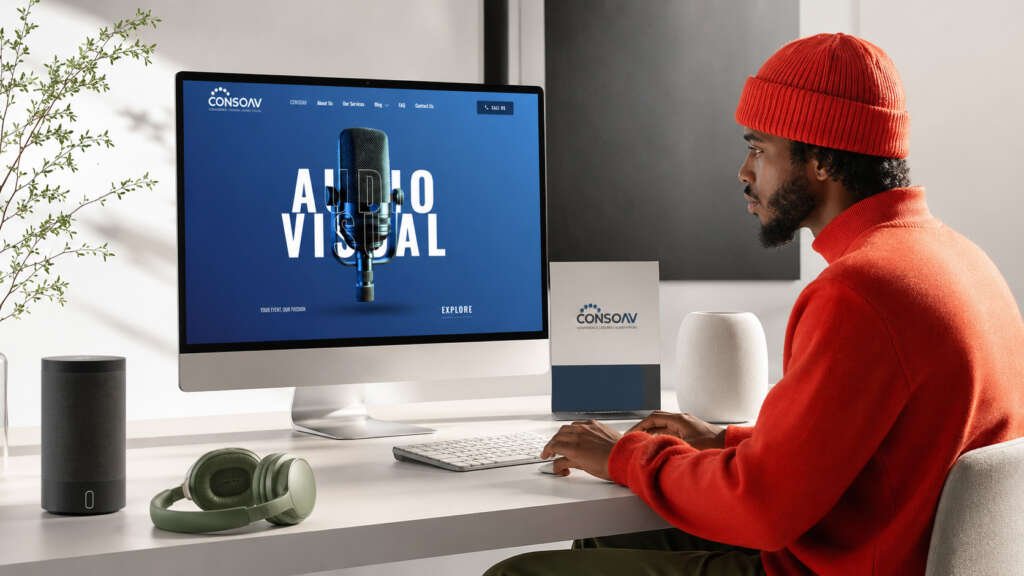
- Strengthen your website
- Support your digital marketing
- Present better in tenders
- Attract better clients
- Create consistency across your team
- Separate yourself from competitors
Branding does not replace good service. But it makes good service easier to believe.
That is the point.
Final Thought
Namibian businesses do not only need more visibility. Many already have that.
They need stronger trust signals.
They need brands that look as serious as the work they do. They need design systems that create consistency. They need websites, profiles, proposals and digital content that feel like they belong to the same business.
Because before the meeting, before the quote, before the call and before the sale, your brand is already speaking.
The question is whether it is building confidence or creating doubt.
WHAT WE DO
Brand Design
Website Design
Digital Marketing
Our Work
Recent posts
Why Trust Beats Visibility
Your Website Is Not A Brochure