Congregational Website Design: Kokerboom Case Study
Congregational website design needs a different kind of care. A website for a faith-based organisation cannot feel like a corporate template with church language added afterwards. It needs to carry trust, theological depth, warmth and a clear sense of purpose.
Kokerboom supports local churches through congregational development, congregational studies, practical theology, facilitation, research, training and accompaniment. Its work helps pastors, elders and church councils listen more carefully to the life of the congregation and the community around it. You can read more in Kokerboom’s partner profile.
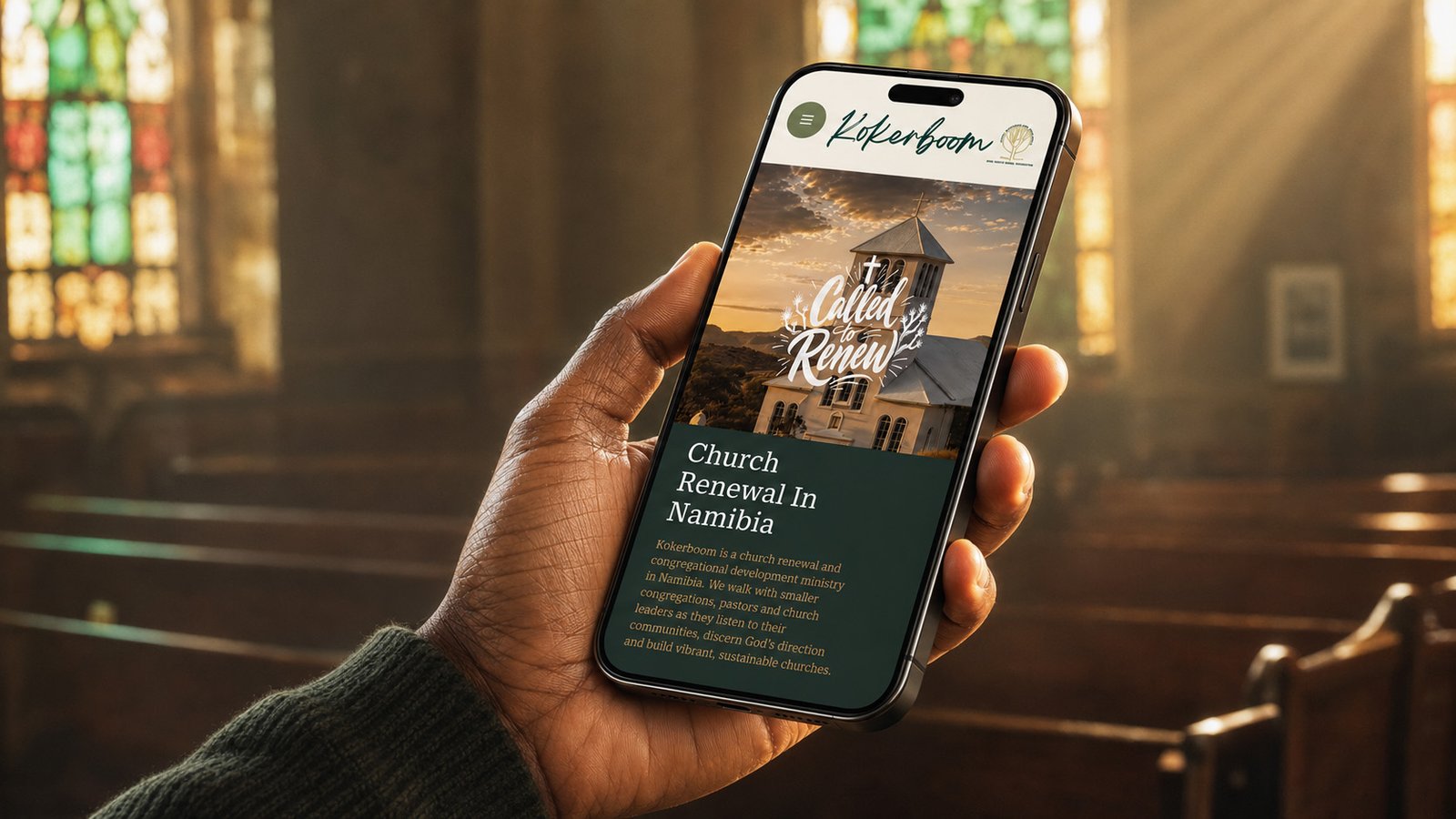
Adzooka designed the Kokerboom website to give this work a clear, credible and pastoral digital home. The goal was to create a website that could explain the organisation’s work without making it feel heavy, academic or distant.
Why Kokerboom Needed A Stronger Website
Kokerboom’s work is relational and reflective. It deals with memory, calling, place, leadership, community, theology and mission. That kind of work is meaningful, but it can be difficult to explain quickly.
This is where congregational website design becomes more than a visual exercise. The website had to help people understand what Kokerboom does, why the work matters and how congregations can benefit from walking with the organisation.
The website needed to speak to pastors, church councils, donors, mission partners and congregational leaders. Each audience needed clarity, but not the same kind of clarity. Pastors needed to understand the support available. Church councils needed to trust the process. Partners needed to see the deeper purpose behind the work.
The Website Strategy
The strategy behind the Kokerboom website was built around calm, clarity and theological credibility. The site needed to feel welcoming without becoming soft, and thoughtful without becoming complicated.
Adzooka shaped the website around the kinds of questions congregations often need to ask:
- Who are we?
- Where have we come from?
- What is happening in our community?
- What is God already doing among us?
- What is our calling in this place?
These questions helped guide the structure and tone of the website. Instead of using aggressive marketing language, the website invites reflection. It positions Kokerboom as a companion in congregational development, not as a programme being pushed onto churches.
This makes the project a strong example of congregational website design because the site respects the nature of the work. It does not treat a congregation like a customer segment. It treats the congregation as a living community with story, memory, relationships and calling.
A Visual Language With Meaning
The name Kokerboom carries a strong metaphor of resilience, rootedness and life in difficult conditions. The website needed to reflect that meaning visually, without becoming decorative or overly symbolic.
Adzooka developed a calm visual direction with warm tones, refined illustrations, generous spacing and a pastoral rhythm. The design avoids noise and pressure. It creates breathing room, which suits the work of listening, discernment and congregational reflection.
Good congregational website design should help people feel the character of the organisation before they read every word. For Kokerboom, the design needed to feel grounded, wise, hopeful and patient.
The result is a website that feels human and considered. It does not look like a generic ministry site. It has its own identity, rooted in the work Kokerboom does with local churches.
Content That Explains The Work Clearly
One of the most important parts of the project was the content structure. Kokerboom’s work includes congregational development, congregational theology, practical theology, missional churches, facilitation, research and accompaniment. These are important ideas, but they can become difficult if they are presented too densely.
Adzooka shaped the content so the website could explain the depth of the work in accessible language. The writing needed to be clear enough for a first-time visitor, but still serious enough for pastors, theologians and church leaders.
The copy avoids empty church phrases. It explains Kokerboom’s role in helping congregations listen, reflect, ask better questions and discern their next faithful steps.
This is an important part of congregational website design. The website must be readable, but not shallow. It must be search-friendly, but not stuffed with keywords. It must sound like the organisation, not like a marketing agency speaking on its behalf.
Designing For Trust
Trust is central to Kokerboom’s work. A congregation will not open its story, concerns or questions to an organisation that feels unclear or careless. The website therefore had to build trust from the first impression.
The design uses a calm structure, clear headings and gentle movement through the content. The language gives visitors enough information to understand the work without overwhelming them.
The website also helps Kokerboom feel more established. This matters because digital credibility affects how people judge an organisation before they make contact. A strong website helps pastors, church councils and partners feel that the work is thoughtful, structured and worth exploring.
Congregational website design must support trust before it asks for action. Kokerboom’s website does this by giving visitors clarity, context and confidence.
Supporting Kokerboom’s Toolkit
The website also gives space to Kokerboom’s practical tools and methods. These include guided reflection, walking tours, talking through history, listening processes, mapping, facilitation and congregational conversations.
These tools show that Kokerboom’s work is not only theoretical. It is practical, local and participatory. Congregations are invited to reflect on their own story, their place and their calling.
This is where practical theology becomes visible. The website helps users see the connection between theological reflection and everyday congregational life.
A strong congregational website design should make that connection clear. It should show that theology is not only something studied. It is something lived, discussed, remembered and practised within a community.
Digital Visibility And SEO
The Kokerboom website was also built with search visibility in mind. Many faith-based organisations depend on referrals, personal networks and partner relationships. Those connections matter, but a clear website creates a stronger digital foundation.
When people search for congregational development, congregational studies, practical theology, congregational theology or missional churches, Kokerboom needs to be easier to find and understand.
This is why the website uses clear language around the organisation’s real work. Search engines need to understand the subject of the site, but people must still feel that the writing is natural and trustworthy.
Good congregational website design brings strategy, structure, content and visual identity together. It helps the right people find the organisation and understand its purpose.
The Result
Adzooka created a website that gives Kokerboom a warmer, clearer and more credible digital presence. The site communicates theological depth, practical support and pastoral care in a way that feels calm and accessible.
The final website supports Kokerboom’s role as a companion in congregational development. It helps pastors, church councils, partners and donors understand the organisation’s purpose and the kind of support it offers. A related project profile gives further context on Kokerboom’s work with smaller churches and church leaders.
The website does not try to make Kokerboom look corporate. It helps the organisation feel thoughtful, grounded and faithful to its work.
Why This Project Matters
This project shows why congregational website design should be approached with care. A beautiful website is not enough. The website must carry the right tone, structure, language and spiritual sensitivity.
For organisations working in congregational development, practical theology, congregational studies and missional churches, digital presence matters. A well-designed website can make the work easier to explain, easier to trust and easier to support.
Adzooka helped Kokerboom build a website that reflects its calling: to walk with congregations as they listen, remember, discern and participate more faithfully in God’s work in their communities.
For churches, ministries, theological organisations and mission-focused initiatives, Adzooka creates websites that combine strategy, design, content and SEO. We help organisations communicate with clarity, credibility and care.